Huntington Park highlight
Historic working-class community
Incorporated in 1906 as a streetcar suburb designed to house workers for nearby industries, Huntington Park has maintained its character as a working-class community.
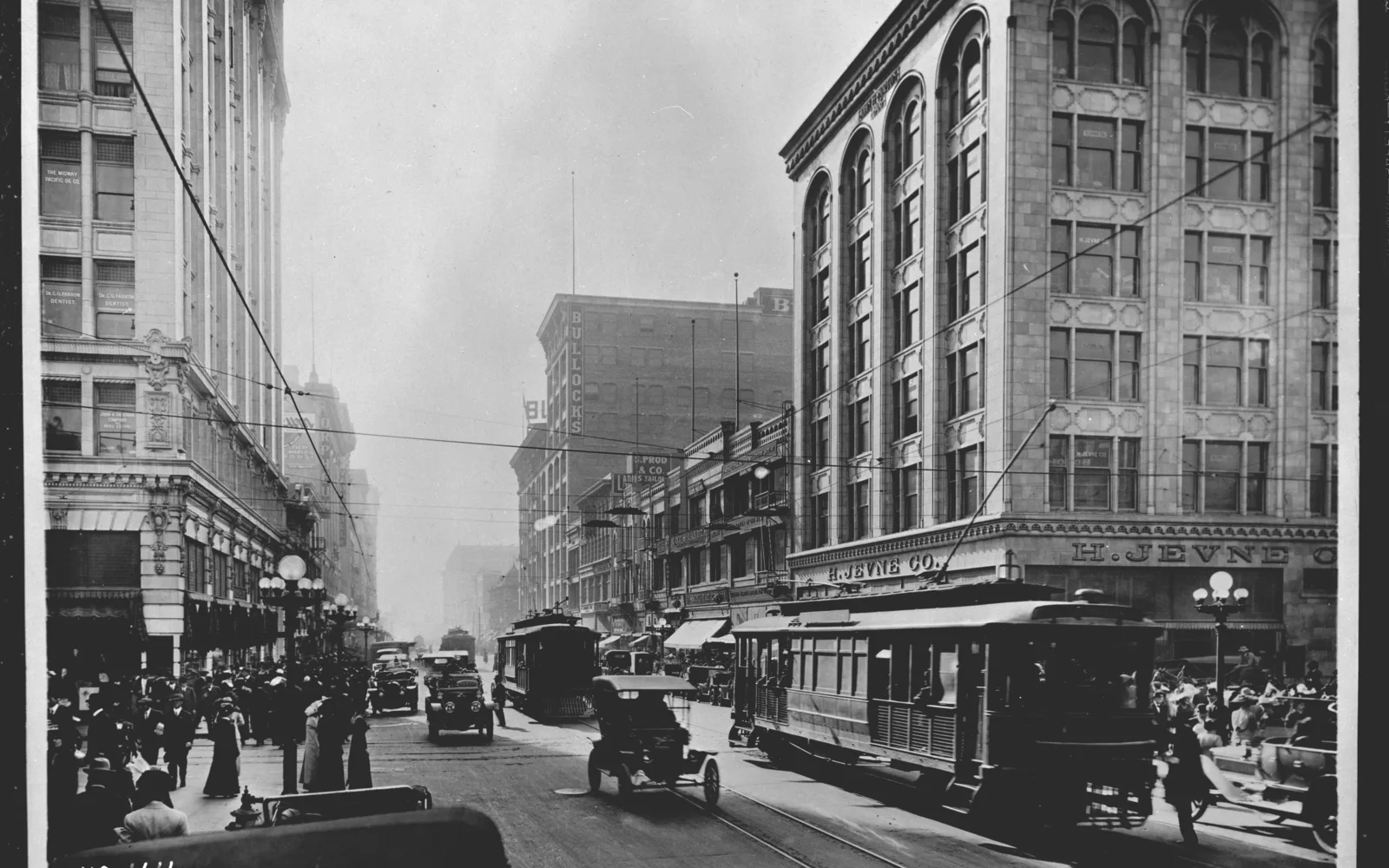
Huntington Park was incorporated on September 1, 1906, during an era of rapid growth in Southern California driven by rail transportation and industrial development. The city was created as a streetcar suburb—a residential community planned to house workers employed in factories, warehouses, and other businesses in the surrounding industrial areas. Real estate developers and the Los Angeles Railway envisioned Huntington Park as an affordable place for working families to buy homes and raise children while commuting to employment elsewhere in Los Angeles County.
The architecture of the city reflects this working-class heritage. Pacific Boulevard, the main commercial street, features Streamline Moderne and Art Deco buildings from the 1920s and 1930s, including the Warner Theater, which opened in 1930 as a 1,468-seat entertainment venue designed by architect B. Marcus Priteca. These structures remain in use today as apartments, shops, and cultural gathering places, continuing to serve the neighborhood as they did a century ago.
In the contemporary economy, Huntington Park continues to be home to working families—nurses, construction workers, food service employees, drivers, and others in essential occupations. These are the households most protected by term life insurance: people whose income directly supports their family's housing, food, education, and stability. A 20-year or 30-year term policy ensures that if the working member of the family is not here, the others can stay in their home and manage their lives.